
Get to Know Dukkah
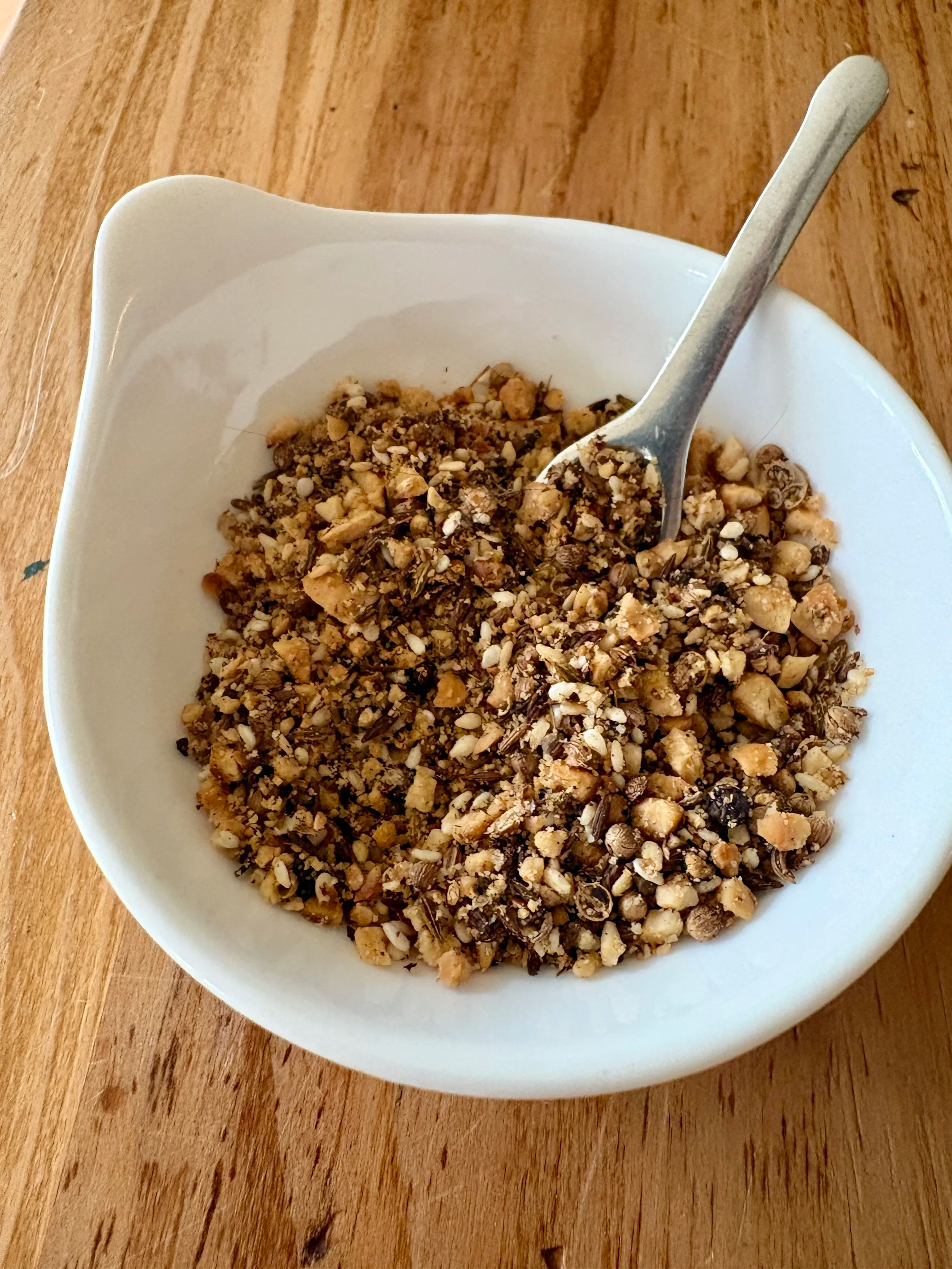
At Woodshed on Park, I enjoyed a baby kale salad with an unusual topping that was savory, complex, and provided a contrasting texture: dukkah. Pronounced doo-kah and sometimes spelled duqqa, the word means “to crush” in Arabic, referring to how this blend of nuts, seeds, and spices is traditionally made in a mortar and pestle.
The crunchy mix hails from Egypt and is used all over the Middle East where it’s commonly served with oil as a dip for bread. But there are many other ways to use this intriguing mix: sprinkle some over hummus, mashed potatoes, or even popcorn; add it to a breading for fish or chicken cutlets; stir some into yogurt to top cooked beets, or toss it with your favorite roasted vegetables. Of course, it’s also great on salads as Woodshed demonstrates.
You won't find dukkah at most supermarkets, though you may see it at a Middle Eastern store and can order it online. However, it’s very easy to make at home with readily available ingredients.
Dukkah
Specific recipes for dukkah can vary, and while this one does not hail directly from Woodshed, it makes for a similar aromatic addition.
Makes about 1/2 cup
Ingredients
2 heaping tablespoons hazelnuts (skins removed) or almonds
1 tablespoon coriander seeds
1½ teaspoons cumin seeds
½ teaspoon fennel seeds
¼ teaspoon whole black peppercorns
1 tablespoons toasted sesame seeds (see Note)
Pinch kosher or sea salt
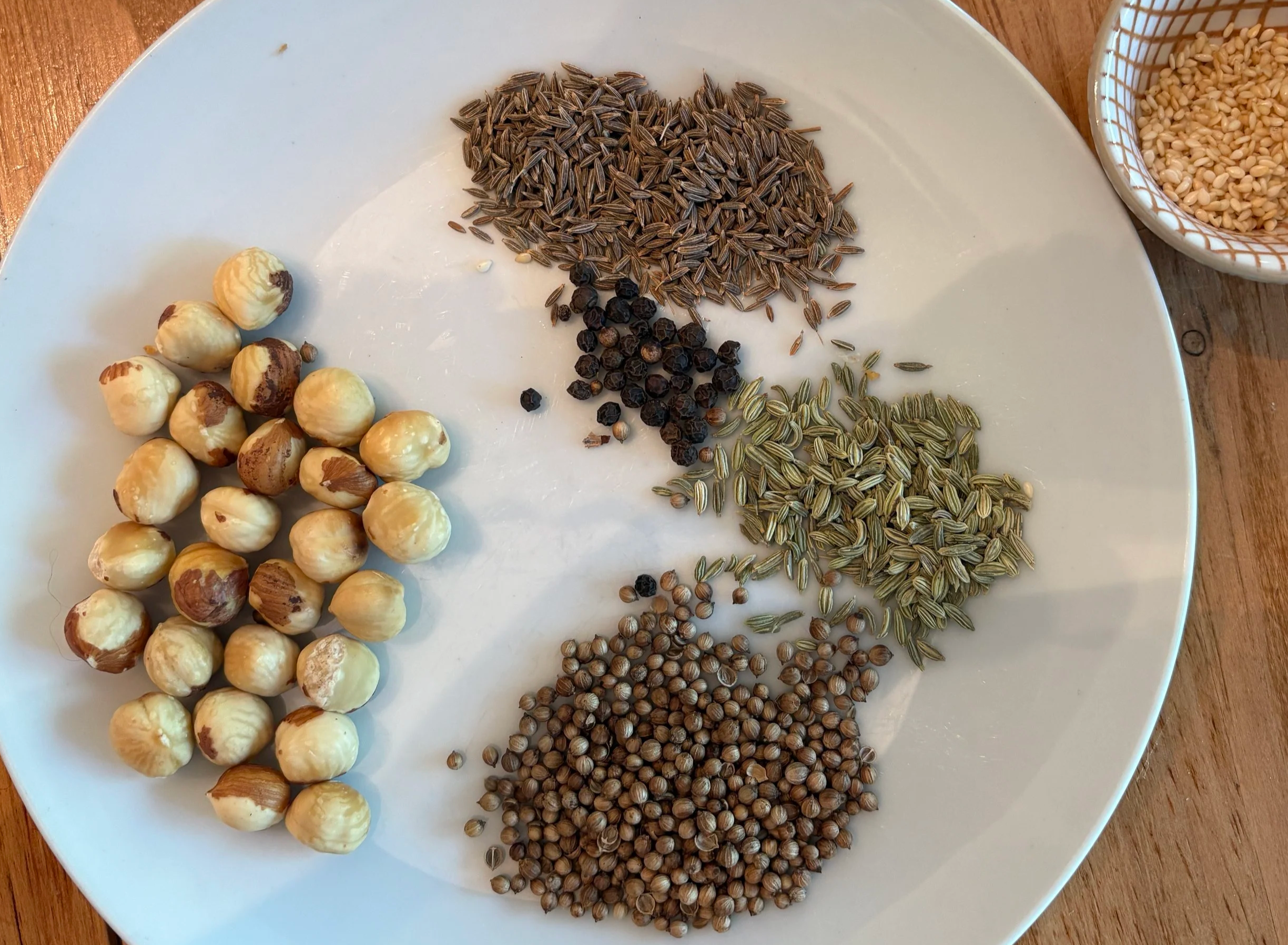
Dukkah may sound exotic but you can make it from ingredients you likely have on hand.
Directions
Position a rack in the center of the oven and heat the oven to 350F. Place the hazelnuts in one overproof pan in a single layer and toast for 4 minutes. Add the coriander, cumin, peppercorns, and fennel to the pan, and toast until the nuts and spices are fragrant and lightly golden, another 3 to 4 minutes. Let cool.
Except for the sesame seeds, transfer the nuts and all spices to a mortar and pestle or a spice grinder and grind to a medium grind. Stir in the sesame seeds. Season to taste with salt. Store airtight in the refrigerator.
Note: If you only have untoasted sesame seeds, you can toast the seeds yourself - in a small pan on the stove works well - but do it separately from toasting the other seeds.